

Secure, AI-native Automation Platform
The world's best automation platform for software teams that want to get more done in less time.
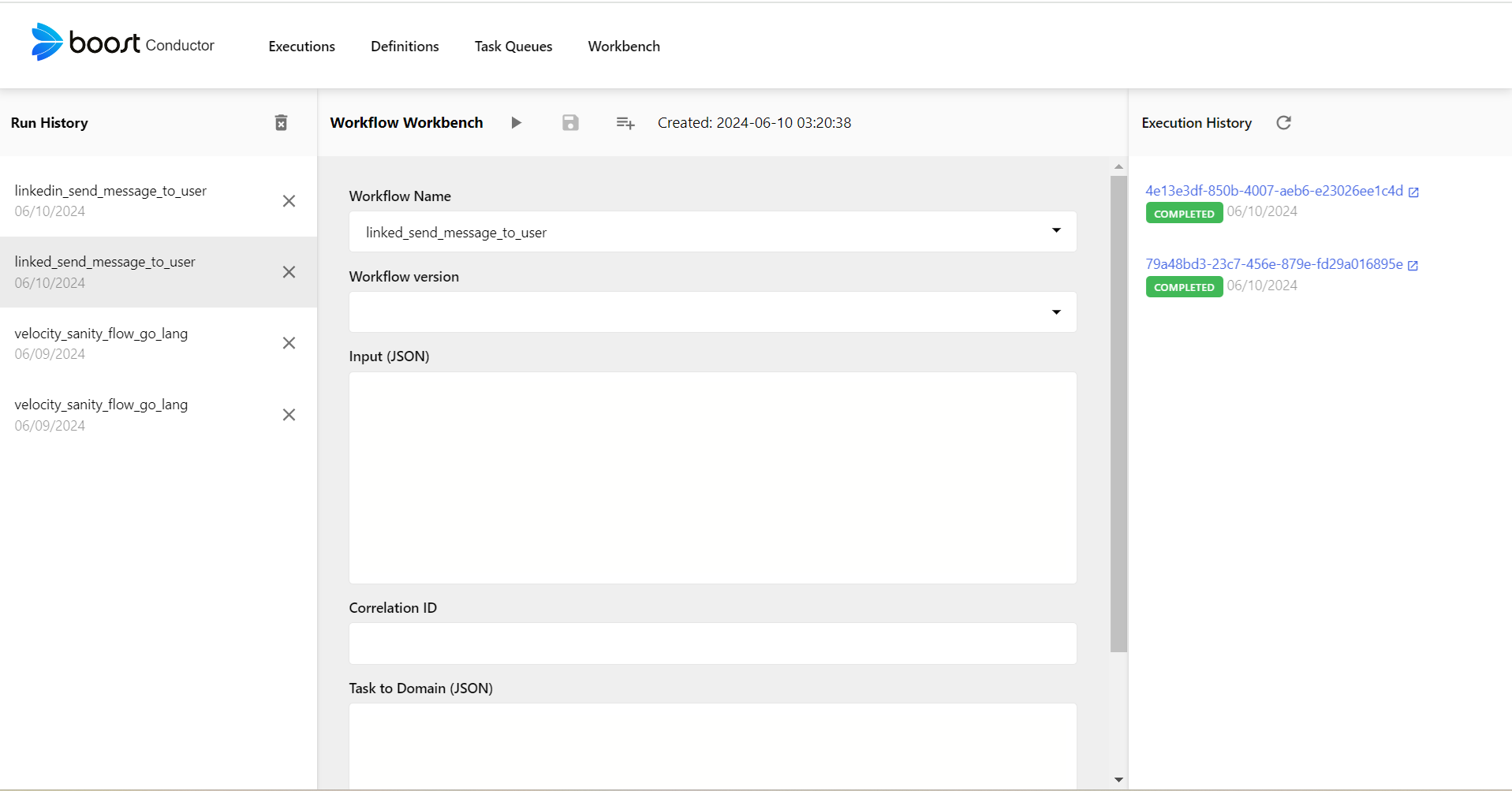
Trusted by over 1,200 companies worldwide, Conductor, the powerhouse behind Boost, boasts nearly 13,000 GitHub stars
"I've tried numerous music streaming apps. This is the game-changer I've been waiting for. It offers the perfect blend of discoverability and personalization."
"I've been a music blogger for years, and Beatbox has simplified my music discovery process. It's intuitive, and the personalized playlists keep my readers engaged."
"Being an independent artist, Beatbox has given me the platform to reach a broader audience. The seamless sharing features and analytics have been a game-changer for my music career."
Features
Boost your automation without the hassle of building infrastructure. Our platform is designed to help you get more done in less time.
Handle complex automation
Handle branching, merging and iteration easily. Pause your automation to wait for external events.
Simple debugging
View logs, screenshots, inputs and outputs for your steps in a central location.
If you want to code, code. If you want to drag, drag.
You can design your automation in code, in JSON or using our editor. Whatever you prefer.
Reuse your building blocks
Our platform is designed to help you reuse your automation components across different automations, thus allowing your team to quickly expand their automation coverage.
Connect to any system, easily
Use our existing connectors or build your own. Our platform is designed to be extensible.
Handle errors in a snap
Errors are a fact of life. Our platform is designed to help you handle them gracefully and trigger other cleanup automation upon failure.
Scale and separate your automation
You can run your automation everywhere, in how many copies that you want, allowing you to scale and separate your automation according to your needs.
Retry, retry, retry
You can configure your automation to retry on failure, with or without a backoff strategy, making it more robust.
Powerful APIs
You can use our powerful APIs to integrate our platform with your existing systems, or to build your own connectors.
User management
Control who can access the platform and what they can do with user management features.
How It Works
Get set up in 3 simple steps
1Sign Up
2Customize Your Profile
3Dive into the World of Music

Frequently Asked Questions
If you have further question, please contact us
1Is there a free trial available?
2Can I cancel my subscription?
3Is offline listening available?
4How can I contact customer support?
5Do you offer student discounts?
6Do you offer startups plans?
What are you waiting for? Start automating today!
14 day free trial. No credit card required.